
Ed Sheeran has described the week following Macklemore’s removal from his Loop Tour as one of the worst of his life, telling 50,000 Philadelphia fans why he chose to continue the tour despite pressure to stop.
by Paul Cashmere
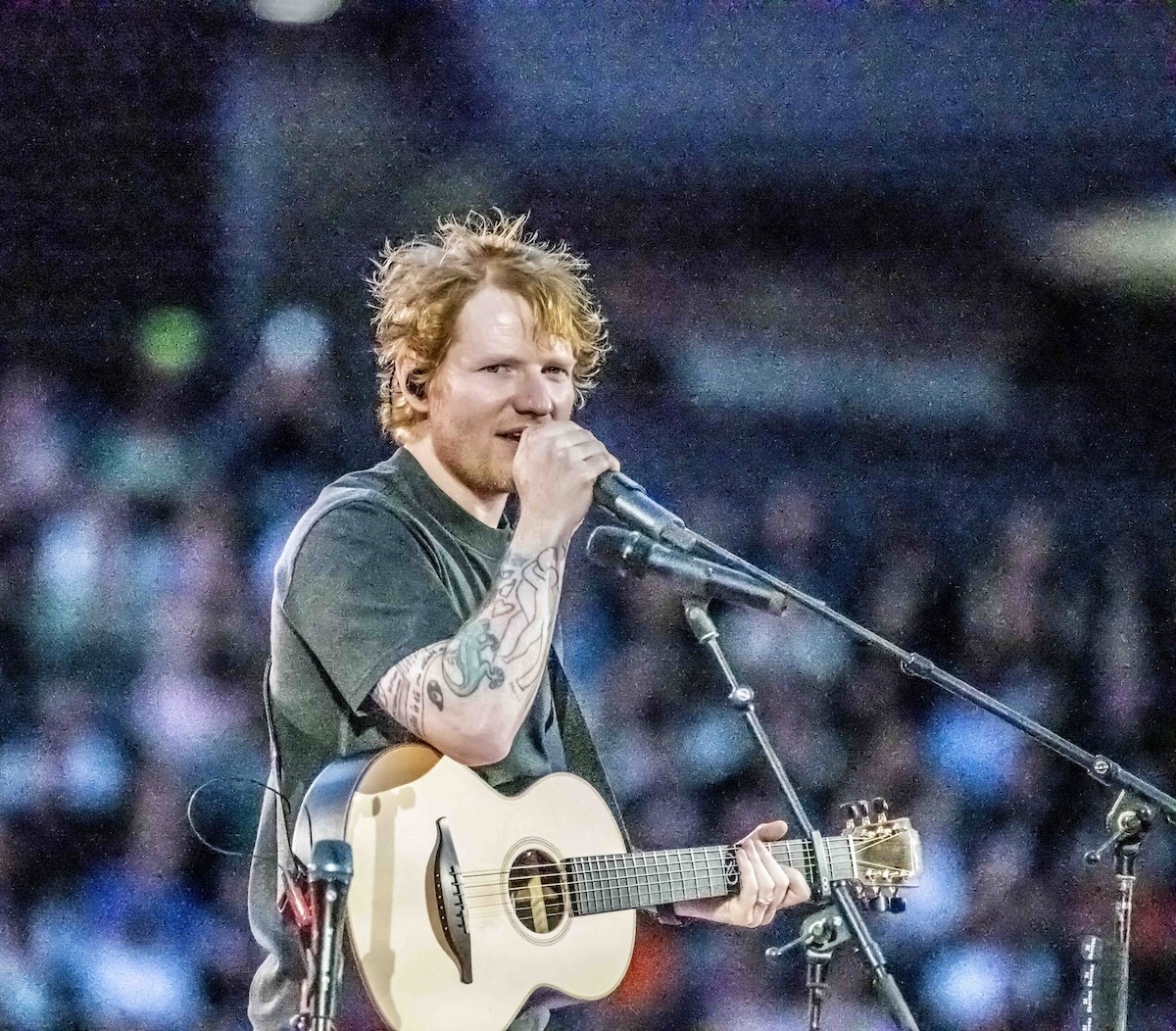
Ed Sheeran has broken his silence on the Macklemore controversy from the stage in Philadelphia, revealing that he questioned whether he would continue touring or even remain an artist after Macklemore was removed from the US leg of his Loop Tour. Speaking before his September 19 performance at Lincoln Financial Field, Sheeran said he had been urged by people around him to cancel the tour, while uncertainty over his safety and the reaction of audiences had left him questioning what would happen next.
The Philadelphia concert was the first Sheeran show since Macklemore was removed following his pro-Palestinian comments during performances at New Jersey’s MetLife Stadium. The decision subsequently prompted Finneas, Aaron Rowe, Lukas Graham and Beoga to withdraw from Sheeran’s remaining shows.
Sheeran had previously said the decision to remove Macklemore was made by promoter Messina Touring Group and the venues, after he spent the week attempting to find a way for the tour to continue with the rapper. In Philadelphia, however, he revealed the personal impact of the dispute in considerably greater detail.
“The last week of my life has been one of the worst weeks of my life,” Sheeran told the audience. “Today has been one of the weirdest days of my life. Tonight has been honestly the best show of my life.”
The singer said he had not known whether he would even get back on stage. He also described feeling that people he had known for many years were distancing themselves from him.
Then came the detail that appeared to give him the resolve to perform.
Sheeran said he had watched ticket sales for the Philadelphia concert and, rather than seeing people cancelling, saw people continuing to buy tickets.
“I look at the end of the week, and I see 50,000 people who haven’t abandoned me,” he said.
The significance of that number was central to Sheeran’s explanation of why he continued. He described the audience as people who had invested far more than the price of a concert ticket, citing hotels, flights, buses, restaurants, babysitters and family arrangements.
“This wasn’t the easy option tonight,” he said, explaining that he did not know whether he would be safe, whether the audience would be safe, or whether he would be booed or have objects thrown at him.
Instead, he said, he walked onto the stage and felt welcomed.
The Philadelphia speech also represented a significant development in Sheeran’s public position on the underlying Israel-Palestine conflict. In his earlier statement, Sheeran said he had personal views but did not want his concerts to become political forums. In Philadelphia, he explicitly described the situation in Gaza as a source of profound distress, while continuing to frame his concerts around unity and humanity.
Sheeran said the world, and America in particular, was a frightening place and argued that a concert could provide hope by bringing together people with different backgrounds, religions and political beliefs.
“You are standing next to people and dancing with people you may disagree with, but you probably understand them better by being one and loved,” he said.
That message goes directly to the unresolved question created by Macklemore’s removal. Macklemore has argued that his public advocacy for Palestinians is part of his responsibility as an artist. Sheeran has previously drawn a distinction between respecting Macklemore’s right to speak and allowing political debate to become the focus of his own concerts.
In Philadelphia, Sheeran acknowledged that distinction had become difficult to maintain.
“I have had so many opinions on this, but the root of it is love,” he said. “And if this tour ends, love doesn’t win.”
He also apologised to parents for beginning the concert with a political discussion, acknowledging that families had not necessarily purchased tickets to hear that subject addressed from the stage.
The consequences of the Macklemore decision remain visible across the Loop Tour. Macklemore was originally scheduled for eight of the final 10 US dates, while the withdrawal of the other supporting acts subsequently left Sheeran without the support lineup that had been announced for the tour.
Philadelphia therefore became more than simply the next date on the itinerary. It was the first opportunity to see whether Sheeran could continue the tour after a week in which his opening act had been removed, his other supporting artists had withdrawn and the dispute had become a broader argument about political expression, venue power and artistic freedom.
For Sheeran, the answer in Philadelphia was to continue.
“I can’t let you guys down,” he told the audience. “I can’t, and that’s why I’m here tonight on my own.”
He closed by returning to the purpose he says sits at the centre of his concerts: music bringing people together despite their differences.
“My shows are about this: they’re about unity, they’re about love, they’re about family,” he said. “And I will never stop doing this.”
The Macklemore controversy remains unresolved, but Sheeran’s Philadelphia speech has changed the conversation. He is no longer only explaining why Macklemore was removed. He is now publicly acknowledging the personal consequences of that decision while making clear that he intends to keep performing.
Stay updated with your free Noise11.com daily music news email alert. Subscribe to Noise11 Music News here
Be the first to see NOISE11.com’s newest interviews and special features on YouTube. See things first-Subscribe to Noise11 on YouTube
Follow Noise11.com on social media:
Facebook – Comment on the news of the day